Home / Tennis Courts / Tennis Court Resurfacing
SURFACE PLANNING · SITE EVALUATION · PROJECT ESTIMATES
Restore worn tennis court coatings and playing lines with a resurfacing plan based on the condition of the existing court. MB Sports Builders evaluates hard-surface tennis courts for homeowners, clubs, schools and recreation facilities before recommending repairs, preparation and a compatible finish.
Request A Free Estimate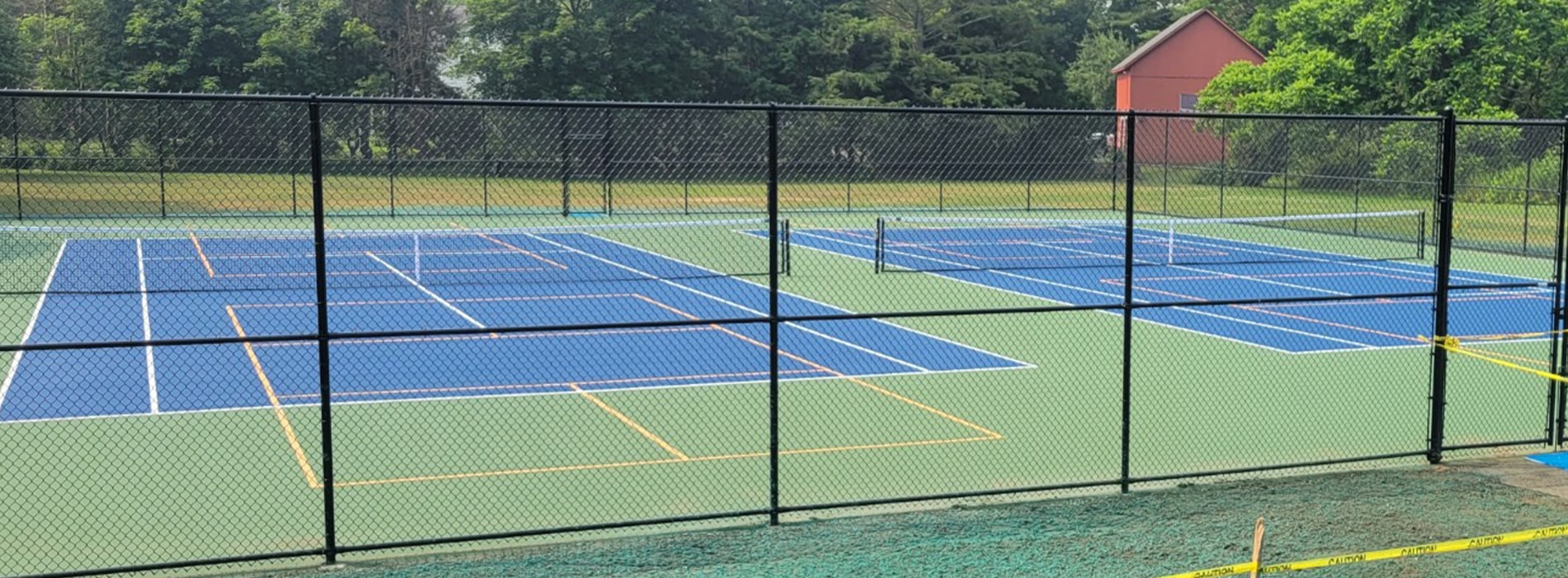
Example of an existing finished court surface. Colors and layout are selected for each project.
Loss of color, worn texture and indistinct lines can make an otherwise serviceable court a candidate for resurfacing. We review the existing coating and how the court is used before planning the finish.
Visible cracks and water that remains after rain need investigation before new coatings are applied. Repairs must address the observed condition; surface coatings do not stabilize a moving foundation.
Discuss tennis-only markings or adding compatible pickleball lines. Colors, line contrast, net arrangements and available clearances should be coordinated before the surface is finished.
Review wear, cracks, drainage, coating adhesion and access. Widespread base failure may require more extensive work than resurfacing.
Plan cleaning, compatible crack treatment and correction of suitable localized surface defects. The preparation scope follows the evaluation.
Install the selected coating system and approved lines under suitable weather conditions, then allow the required curing time before play.
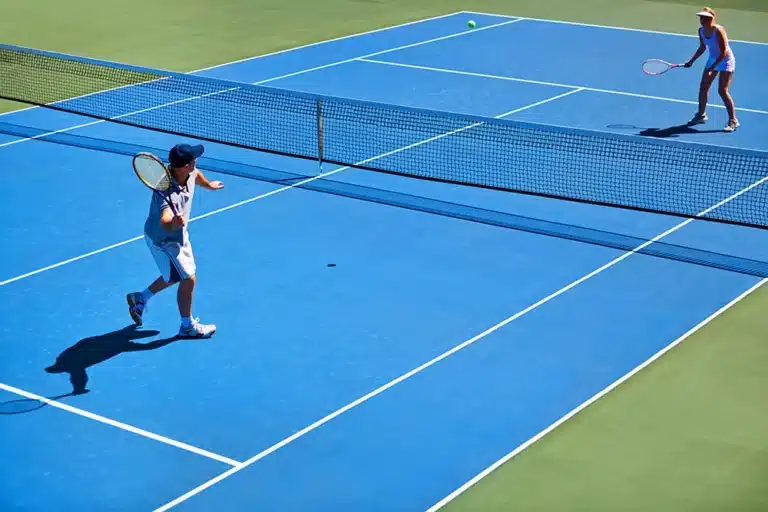
Finished court example. Surface repairs, layout and equipment are planned for each property.
Tennis court resurfacing cost depends on court area, existing coatings, repair needs, drainage issues, access and the specified finish. Adding game lines or equipment changes can affect the proposal. Photos are helpful for an initial discussion, but a site evaluation informs the scope.
For an initial discussion, share the property address, approximate surface dimensions, photos, known surface materials and the work you want completed. We can then discuss evaluation and a proposal that separates preparation, repairs, finishes and equipment as applicable.
Get A Project EstimateFor projects throughout Connecticut, Massachusetts and Rhode Island, contact our Northford, Connecticut office at 203-234-3901. Share your town and the condition of the existing surface so the team can discuss the appropriate next step.
Call NorthfordFor Port St. Lucie, St. Lucie West, Tradition and nearby Treasure Coast communities, contact our Port St. Lucie, Florida office at 352-209-3890. Nearby service discussions include Fort Pierce, Jensen Beach, Palm City and Stuart.
Call FloridaCan resurfacing fix every tennis court crack?
No. Some cracks reflect movement or problems below the surface. An assessment helps distinguish surface repairs from drainage, base or reconstruction work. Repairs cannot guarantee that moving cracks will never return.
When should a tennis court be resurfaced?
Arrange an assessment when coatings wear, texture changes, lines become unclear or cracks and low areas develop. The right interval depends on use, drainage, maintenance and the installed system.
Can pickleball lines be added during resurfacing?
They may be included when the court dimensions, clearances and net arrangement support the proposed layout. Review game priorities before selecting colors and markings.
How is the project schedule determined?
Timing depends on the agreed work, access, weather and material requirements. Surface preparation, paving, foundations, coatings and curing can have different schedules. Share any facility closure dates early so they can be considered during planning.
Which office should I contact for an estimate?
Contact our Northford office for Connecticut, Massachusetts and Rhode Island, or our Port St. Lucie office for the Treasure Coast. You can also request a free estimate online.
Coordinate the groundwork, playing surface and finishing details with these related services.
Assess cracks and surface damage before choosing the repair approach.
Coordinate game lines, boundaries and color contrast for the chosen layout.
Review dimensions and markings for a different mix of games.